Computer Science and Applied Mathematics & Statistics Major 👋🏽
Hi, I'm Bhishma Gaudani, a Computer Science and Applied Mathematics & Statistics major at Stony Brook University, New York.

Hi, I'm Bhishma Gaudani, a Computer Science and Applied Mathematics & Statistics major at Stony Brook University, New York.

Stony Brook University · Part-time
Jan 2026 – Present · Stony Brook, New York, United States

CRIZM · Part-time
Jan 2026 – May 2026 · 5 mos · Stony Brook, New York, United States · On-site
Core Engineering Team
Stony Brook University · Part-time
Oct 2025 – Dec 2025 · 3 mos · Stony Brook University, New York, United States
Stony Brook University
Dec 2024 – Present · Stony Brook University, New York, United States
Student Assistant to the Building Manager of the Charles B. Wang Center. Assisted in daily operations and administrative tasks for the Charles B. Wang Center, which hosts conferences, theatrical performances, and other campus events.

Web Development Club of Stony Brook University
Nov 2024 – Present

Clever Harvey · Internship
May 2023 – Aug 2023 · 4 mos · India · Remote

DI Solutions · Internship
May 2021 – Jun 2021 · 2 mos · India · On-site
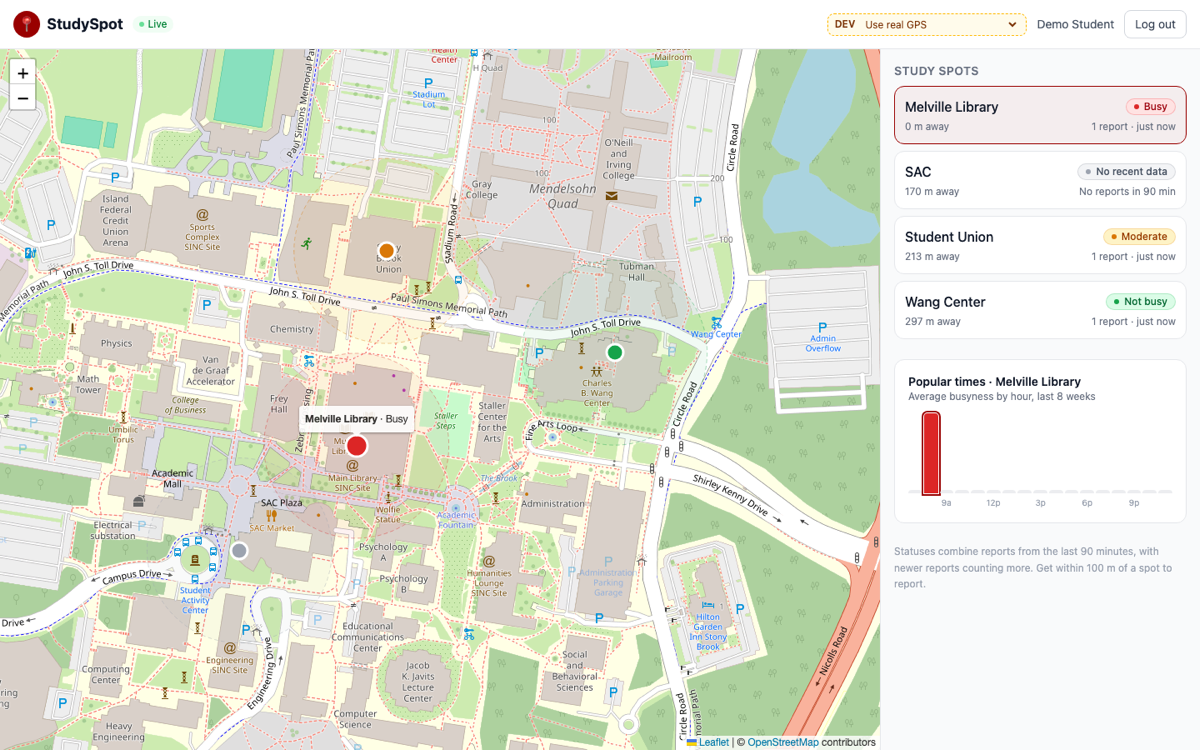
StudySpot is a real-time campus availability platform that helps students check crowd levels at study locations before walking over. Built with React, TypeScript, FastAPI, Supabase, PostgreSQL, and WebSockets, it uses recency-weighted reporting to provide more reliable occupancy estimates and delivers live updates to connected users. The platform also includes geofenced check-ins, rate limiting, and campus-email authentication to improve data quality and prevent misuse.
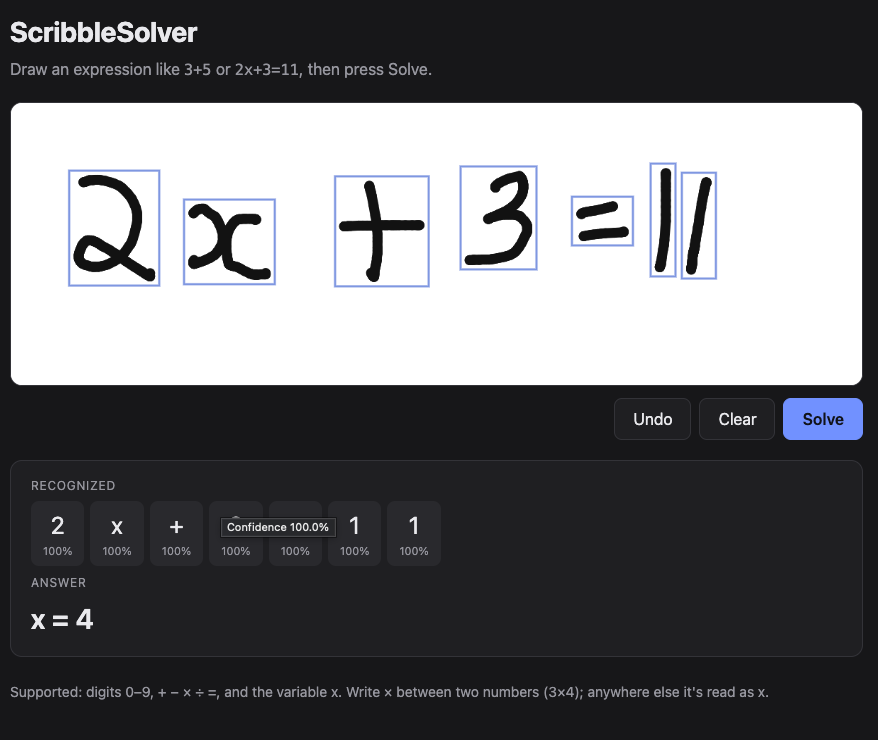
SketchSolve lets you draw a math expression or equation on a canvas and get an answer. It uses OpenCV to separate handwritten symbols, a 15-class convolutional neural network to recognize digits and operators, and SymPy to evaluate expressions or solve equations for x. A Flask API connects the drawing interface to the recognition pipeline. The model achieved 98.83% accuracy on 5,064 held-out symbol images, while the complete pipeline returned the correct answer for 87.40% of 1,000 synthetic equations.
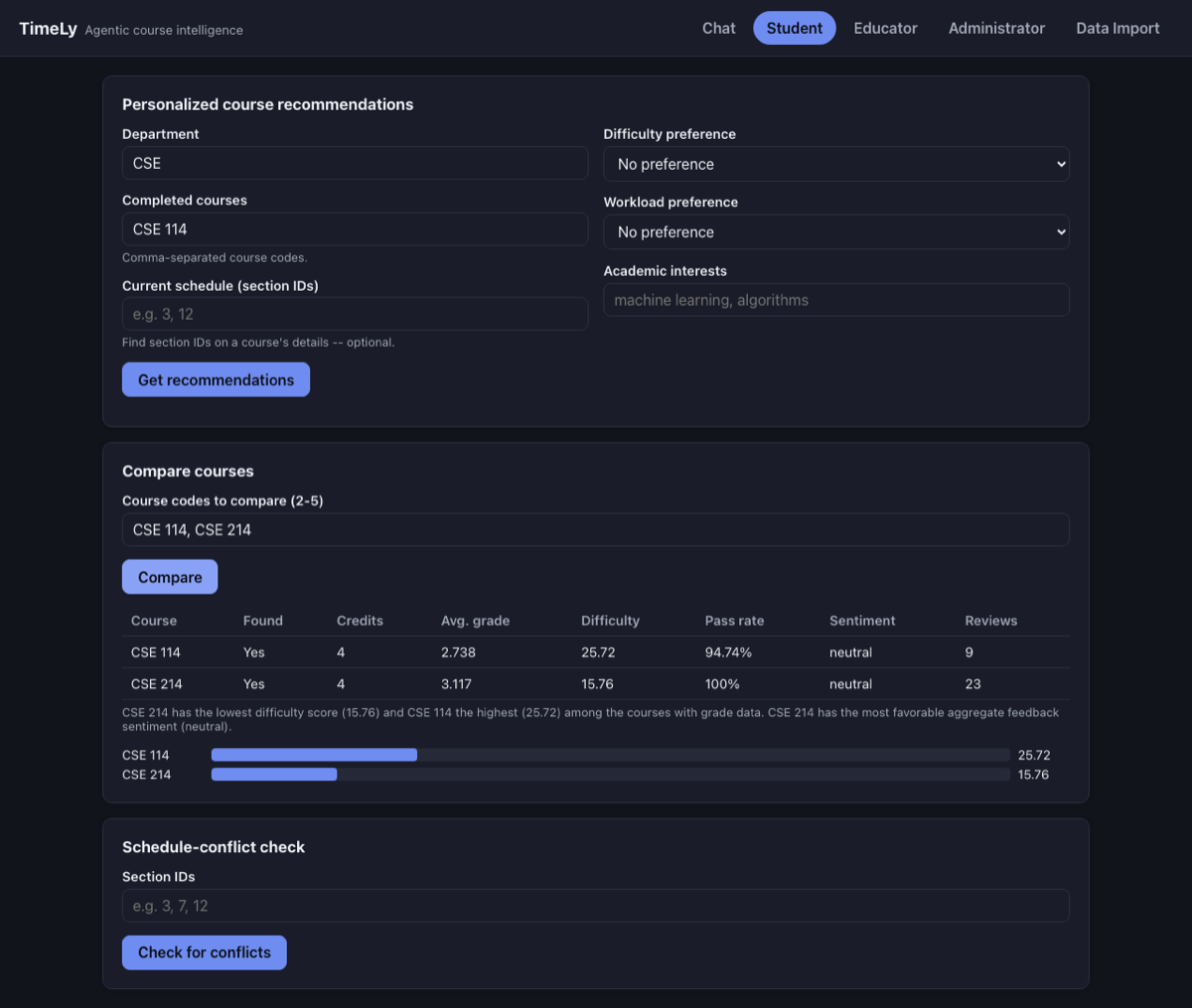
TimeLy is an agentic course-intelligence platform that helps students, educators, and administrators make sense of course grades, feedback, and schedules. A GPT-5 agent with ten tools decides what data to look up, such as searching courses, checking prerequisites, detecting schedule conflicts, analyzing grade distributions and feedback sentiment, and ranking recommendations, then answers while separating real data from its own interpretation. Built on FastAPI and a React + TypeScript frontend, it includes role-based views, CSV/XLSX data import with schema validation, and a 76-test backend suite. Rebuilt from the original TimeLy by Amir Hamza and Ritesh Chavan, used with their permission.
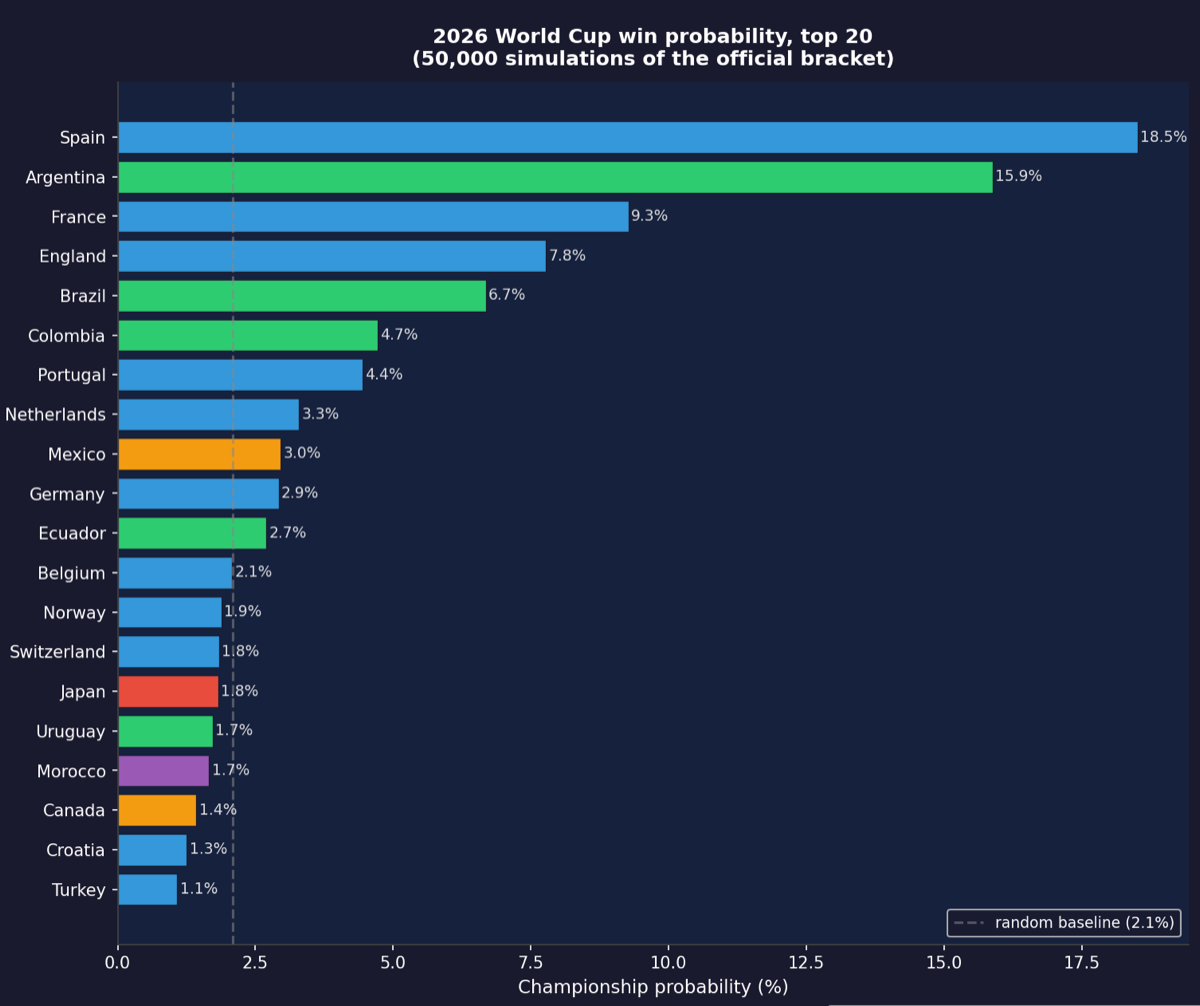
A prediction model for the 2026 FIFA World Cup. It builds Elo ratings from 49,000+ international matches dating back to 1872, trains win/draw/loss models on top of them, and runs 50,000 Monte Carlo simulations of the official tournament bracket to generate championship probabilities for all 48 teams. The model is validated with walk-forward testing on the last five World Cups (2006–2022), reaching a log-loss of 0.959, close to the betting-market benchmark of ~0.95. On a harder out-of-sample test (2,673 matches from 2023–2026 never seen during training), it hits 62% accuracy with well-calibrated probabilities.
@BhishmaGaudani on GitHub